

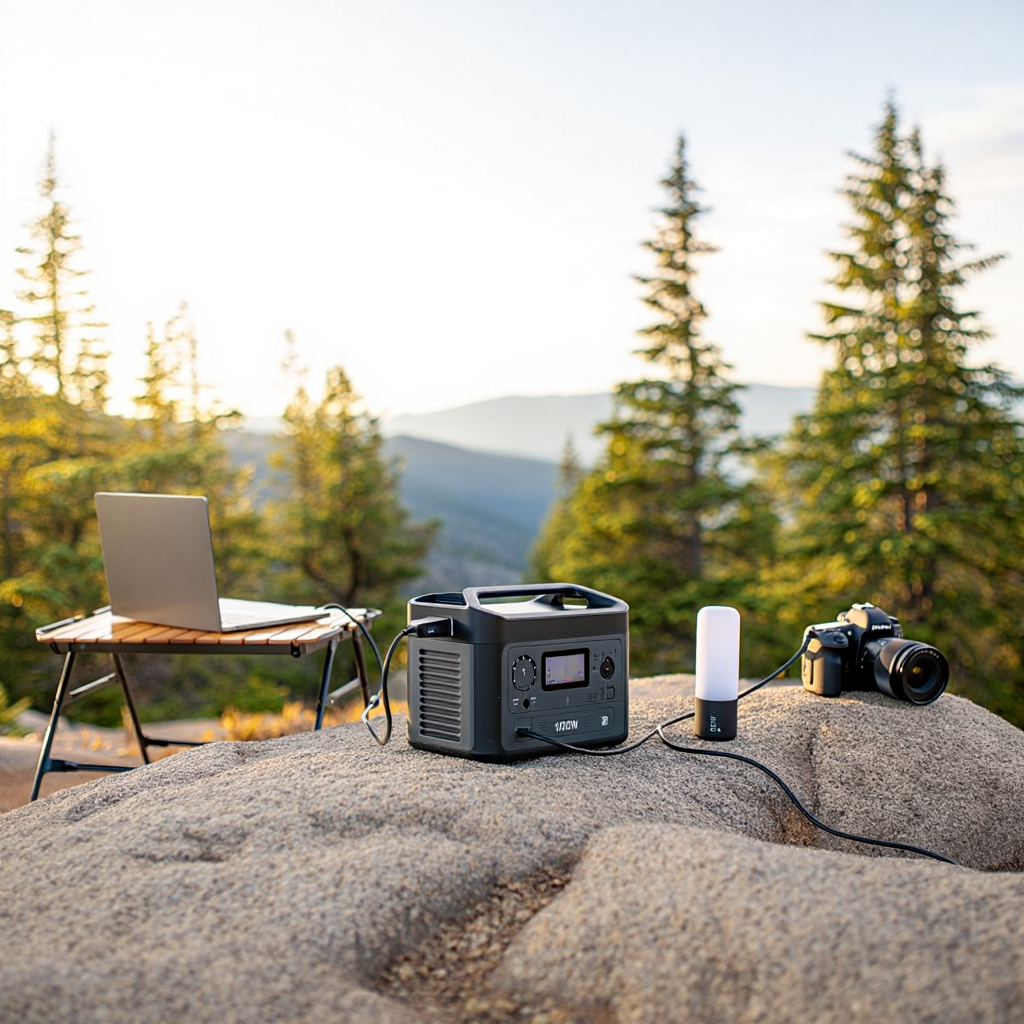
Portable Power Station 1000W units have become an essential part of the camping, RV, and emergency preparedness world in 2024—with the EcoFlow Delta 2 sets the standard for 2024 for users demanding real power, fast charging, and long-term reliability. If you’re serious about never going dark, this guide gives you benchmarks, pitfalls, and hands-on secrets manufacturers won’t tell you.
Key Takeaways
- 1000W portable power stations are trending upwards due to record camping and emergency power demand post-2023.
- The EcoFlow Delta 2 sets the standard for 2024 in charging speed, capacity, and smart features, but there are real world limitations to know before buying.
- Durability, battery lifespan, and solar panel compatibility are critical—yet often overlooked—factors for savvy buyers.
- 2024 Market Trends: The Rise of 1000W Portable Power Stations
- Key Specifications: What Makes a 1000W Portable Power Station Stand Out?
- EcoFlow Delta 2 Review: Capabilities, Performance, and Battery Life
- User Experience & Pain Points: What Real Buyers Say
- Price, Value, and Total Cost of Ownership (2024 Edition)
- Real-World Testimonials: Camping, RV, and Emergency Use Cases
- Warranty, Customer Service & Support: Delta 2 vs The Competition
- What Most Reviews Miss: Battery Lifespan, Extreme Weather & Solar Compatibility
- Conclusion: Is the EcoFlow Delta 2 the Best 1000W Portable Power Station for 2024?
- FAQ
2024 Market Trends: The Rise of 1000W Portable Power Stations
Interest in portable power station 1000W models has surged since 2023, driven by increased remote work, camping, and a renewed focus on home emergency preparedness. According to EcoFlow’s own market data, demand for 1000W-1500W battery units grew over 40% last year alone—the steepest spike since the pandemic era, as both outdoor enthusiasts and homeowners look for off-grid solutions that won’t let them down.
Camping, RVing, and prepping communities cite reliable AC output, fast recharge times, and solar compatibility as critical selection factors. With widespread weather volatility, more households are investing in higher-wattage stations instead of legacy gas generators for environmental, safety, and convenience reasons.
Key Specifications: What Makes a 1000W Portable Power Station Stand Out?
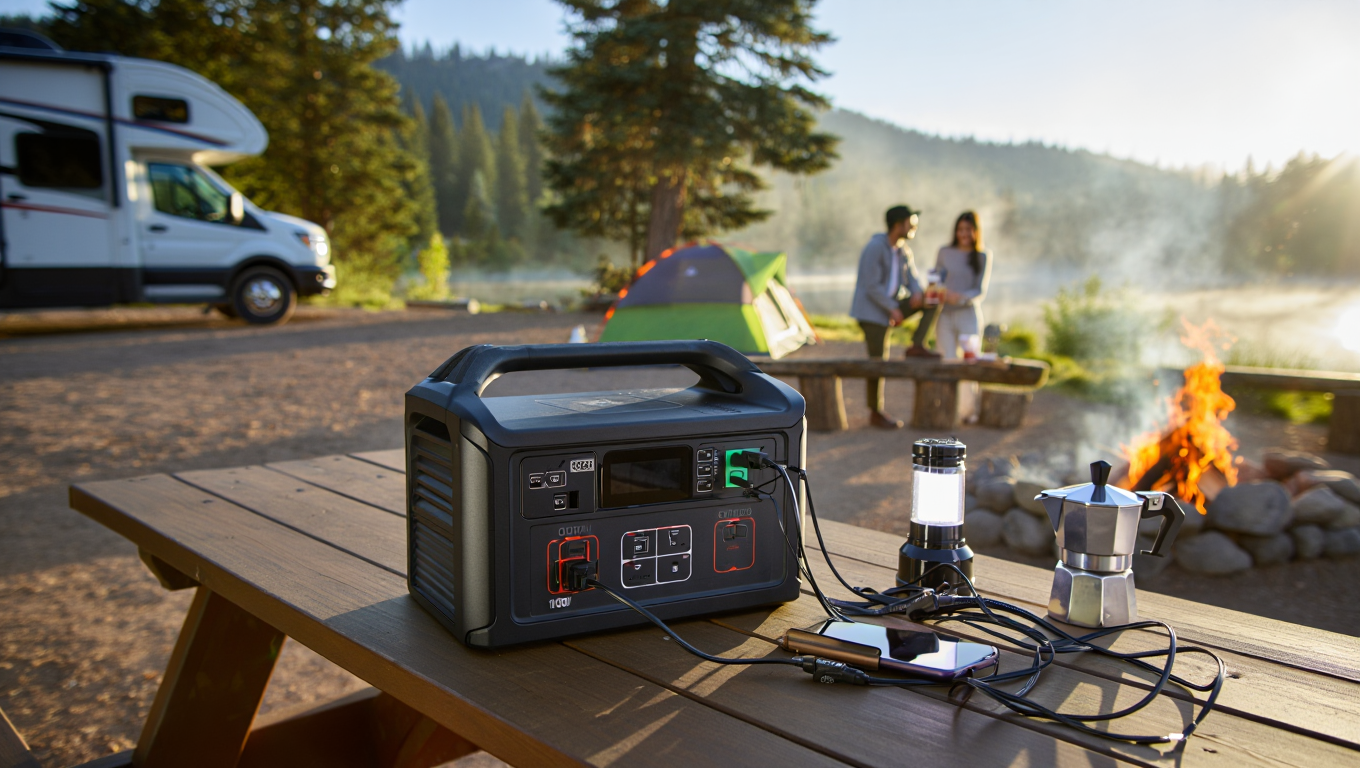
Choosing the right 1000W power station isn’t just about headline numbers. Here’s what you really need to focus on—and why:
- Battery Chemistry: Most new 1000W models use LiFePO4 cells, known for long cycle life and higher safety than old NMC or lead-acid types.
- True Capacity (Wh): “1000W” references output, but you want 900–1200Wh actual capacity for at least 0.8x rated inverter power in real use.
- Inverter Quality: Pure sine wave inverters are a must for sensitive gear; surge/peak ratings matter for motor-driven devices (CPAPs, fridges).
- Input/Output Ports: Priority on multiple AC, high-speed USB-C, and regulated 12V outputs. Look for at least 4–6 USB and 2–4 AC outlets.
- Fast Charging: Top models recharge in under 90 minutes on wall power, under 2.5 hours on solar when paired with quality panels.
- Expandability: Stackable expansion batteries are a game-changer for power users and extended blackouts.
If you’re comparing the EcoFlow Delta 2 to similar models, these technical differences make or break your long-term satisfaction.
Want to see how smart batteries are transforming other product categories? Check out our review of the Mini Gaming PC 2024 where energy efficiency is also a top priority for mobile users.
EcoFlow Delta 2 Review: Capabilities, Performance, and Battery Life
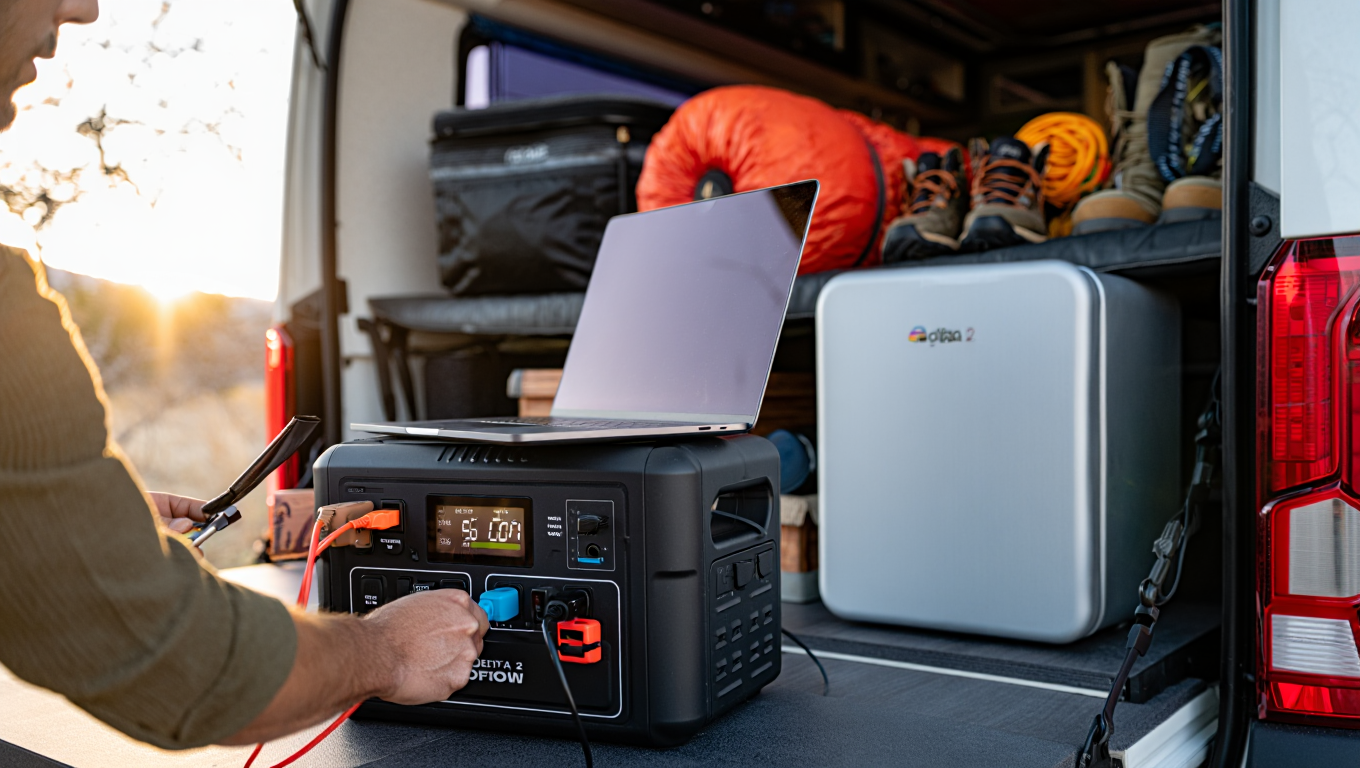
The EcoFlow Delta 2 has quickly become one of the most-reviewed 1000W portable power stations in 2024. Let’s break down its real performance data and user feedback:
- Battery Capacity: 1024Wh (LiFePO4); expandable to 3040Wh with add-on batteries.
- Inverter Output: Continuous 1800W (surge 2700W)—far above its “1000W” class designation, covering 90% of typical appliances (full spec here).
- Charging Speed: 0 to 80% charge in ~50 minutes (AC); full charge in ~80 minutes—industry best (compare stats).
- Cycle Life: 3,000+ full cycles to 80% capacity (LiFePO4) vs 500–800 for previous NMC models.
- Solar Input: Up to 500W native solar, though real performance depends on the panel and sunlight.
In real world tests, the Delta 2 runs a loaded home fridge for 11–13 hours, a CPAP + router + lamp overnight, or recharges your smartphone over 90 times. It outpaces other 1000W stations in high-demand “surge” use (power tools, microwaves), and is virtually silent—critical for tent/van settings.
However, as with all high-output units, total runtime dips under heavy loads. If you plan to run power-hungry appliances consistently, consider expansion modules or “smart stacking” with solar for true off-grid independence. For more on battery innovation, see how E-Ink Tablets are shifting power consumption habits here.
User Experience & Pain Points: What Real Buyers Say
User reviews of the EcoFlow Delta 2 are overwhelmingly positive for reliability, ease of use, and fast recharge. But a deep dive into customer feedback and forums reveals pain points you might miss on spec sheets:
- Battery Degradation: Heavy daily cycling (e.g., living in a van/RV) leads to noticeable runtime drops after 18–24 months—even with LiFePO4 chemistry.
- Solar Panel Compatibility: Users report that not all third-party foldable panels hit the unit’s claimed max input, due to connector and voltage quirks.
- AC Inverter Noise: Some units produce a subtle high-frequency noise under heavy AC load, which is only noticeable in quiet indoor or tent scenarios.
- Extreme Weather: Performance dips notably below 0°C/32°F; display may lag, and inverter can temporarily refuse to kick in until the battery warms up.
- App/Connectivity: Occasional Bluetooth dropouts, though firmware updates help.
Key negative reviews highlight units not charging at promised speeds when paired with underpowered or mismatched solar panels, and a few describe support challenges during warranty claims.
If you rely on continuous off-grid power, budgeting for a second expansion battery and carefully vetting your panels is smart. For those who prioritize user experience in wearables, our piece on Smart Ring Health Tracker offers similar real-world community insight.
Price, Value, and Total Cost of Ownership (2024 Edition)
In 2024, the EcoFlow Delta 2 price ranges from $749–$999 USD depending on bundled accessories or periodic deals. By comparison, competitor units (Jackery Explorer 1000 Pro, Bluetti EB70S, Goal Zero Yeti 1000X) are in the $800–$1200 range, but often offer less peak output, slower charging, or smaller expansion options.
| Model | True Capacity (Wh) | Inverter Output (W) | AC Recharge (0-80%) | Retail Price (USD) | Cycle Life | Expansion Battery |
|---|---|---|---|---|---|---|
| EcoFlow Delta 2 | 1024 (LiFePO4) | 1800 | 50 min | $749–$999 | 3000+ | Up to 3040Wh |
| Jackery Explorer 1000 Pro | 1002 (NMC) | 1000 | 1.8 hr | $1099 | 1000 | No |
| Bluetti EB70S | 716 (LiFePO4) | 800 | 2 hr | $599 | 2500 | No |
When calculating cost per Wh and factoring cycle life (battery replacements over 4–6 years), EcoFlow Delta 2 stands out for lowest long-term ownership cost even at higher upfront price. Accessories like expansion batteries ($799 each) and high-wattage solar panels are additional, but expand flexibility and value for serious users.
Consider warranty duration and service reputation as “hidden costs” for multi-year owners. Also, if you’re equipping a tech-forward campsite, take a look at our reviews on Open Ear Headphones—another must-have for off-grid travel.
Real-World Testimonials: Camping, RV, and Emergency Use Cases
Case Study 1: Remote Camping
Ashley, a solo backpacker, reports running a mini fridge, string lights, laptop, and camera gear at a Yosemite campsite. The Delta 2 recharged from 0–100% by mid-afternoon using 2x 200W folding solar panels even on partial-sun days. Downside: once needed to “baby” the solar connections on colder mornings to get full charge rate.
Case Study 2: RV Power Independence
Carlos, a digital nomad, lives full time in his RAM Promaster van. The Delta 2 powers his induction cooktop, Starlink, and fridge, recharging from a 400W rooftop array and campground AC. He notes fast charging is a must on cloudy weeks, but after about 18 months he saw a ~10% reduction in full-charge runtime—consistent with lithium battery aging (“still much better than my old NMC pack”).
Case Study 3: Emergency Blackout
Lisa, a homeowner, used Delta 2 to run CPAP, WiFi, and lights for a full night during a California blackout. She appreciated the mobile app’s “power budget” calculator for planning device use. However, the display froze for several seconds after a cold snap until the battery warmed up.
For other compact emergency tools trending now, see the surge in Portable AI Translator popularity among frequent travelers and remote workers facing unpredictable conditions.
Warranty, Customer Service & Support: Delta 2 vs The Competition
EcoFlow ships Delta 2 with a 5-year warranty (2-year base with 3-year extension on registration)—longer than most rivals, which typically offer 2–3 years. User forums and Reddit threads cite mixed experiences: quick replacement on defective units, but longer turnaround on international claims. Expanded support via chat, phone, and email covers both US and EU regions. Jackery and Bluetti support is often rated “average”—fast response but sometimes slow part shipments.
The best post-purchase experience comes with buying from authorized dealers or direct from EcoFlow’s official site, where warranty claims are more streamlined.
For more on evaluating warranty and support in portable technology, read our overview of Steam Deck OLED vs. competing handhelds.
What Most Reviews Miss: Battery Lifespan, Extreme Weather & Solar Compatibility
Most online reviews gloss over long-term battery health, harsh climate use, and third-party solar compatibility—all crucial for real-world buyers.
- Battery Lifespan: LiFePO4 batteries last longer, but you can expect actual usable capacity to drop 10–20% after 2,000–3,000 cycles, especially if cycled fully and fast-charged daily. The fade is almost invisible in year one, but measurable by year two for power users.
- Weather Extremes: Both high heat and deep cold can temporarily cripple charging or output, even for LiFePO4 stations. Owners in hot climates suggest storing the unit in shade and never charging above 40°C. For freezing temps, start charging only once the battery core is above 0°C.
- Solar Charger Compatibility: Not all solar panels deliver max charge, even if wattage ratings match—the MC4-to-XT60 cable, VOC ratings (11–60V for Delta 2), and direct-sun placement are critical. Some cheaper foldable panels under-deliver, so field testing is wise before relying off-grid.
After 2 years, expect the Delta 2 to hold up for most, but heavy solar/off-grid users should track runtimes and anticipate supplementing with an extra battery if off-grid routinely. For a broad look at future home power, check our Matter Smart Home guide on connected device compatibility issues.
Conclusion: Is the EcoFlow Delta 2 the Best 1000W Portable Power Station for 2024?
If you’re comparing the best 1000W portable power station options this year, EcoFlow Delta 2 stands out with unmatched fast charging, true LiFePO4 longevity, and reliable app features. But, expect some slowdowns in extreme weather and plan for real-world battery fade after two years of heavy cycling.
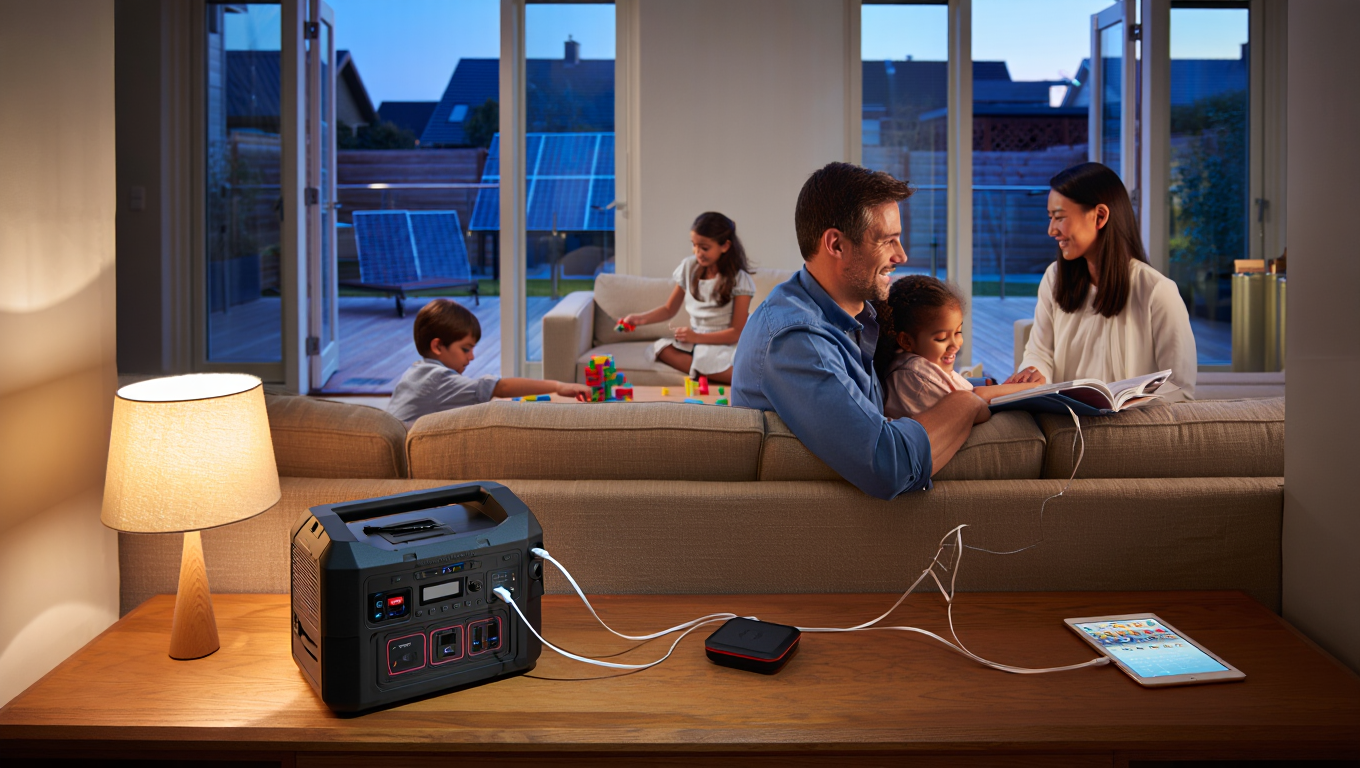
For most campers, RVers, digital nomads, and home emergency planners, the Portable Power Station 1000W class—especially EcoFlow Delta 2—is your best bet in 2024 for all-in-one portable, silent, and expandable backup. Ready to upgrade your off-grid power? Research your configuration, test your solar panels, and check the latest prices directly at manufacturer and trusted reseller sites before you buy.
FAQ
How long can a 1000W portable power station run a refrigerator?
On average, a full-size energy-efficient fridge will run 11–15 hours on a single 1000Wh charge. Smaller portable fridges may last 24 hours or more, depending on actual load and ambient temperature.
Is the EcoFlow Delta 2 safe to use indoors?
Yes, the Delta 2 uses safe LiFePO4 batteries and has no emissions, making it suitable for indoor use. Always ensure proper ventilation and keep away from direct heat sources or standing water.
Can I use third-party solar panels with the EcoFlow Delta 2?
Yes, but you must ensure the panel’s open circuit voltage and connectors match (MC4 to XT60, 11–60V input range). Some portable panels do not charge at listed rates due to cable mismatches or low sun.
Does battery life decrease over time?
Yes. All lithium portable power stations experience gradual capacity loss with heavy use. Expect about 80% original capacity after 2,000 full cycles if well maintained.
What is the warranty on the Delta 2 compared to competitors?
The EcoFlow Delta 2 offers a 5-year warranty (2 years standard, 3 years extension upon registration), while most competitors provide 2–3 years. Always confirm registration is completed to receive extra coverage.