


Open Ear Headphones are transforming outdoor workouts, offering safety, comfort, and surprising performance for runners, cyclists, and urban commuters in 2024.
Key Takeaways
- Open ear headphones—especially bone conduction models—enable situational awareness, reducing accident risk for outdoor users.
- Shokz OpenRun Pro stands out in comfort and battery life but faces stiff 2024 competition on price and audio quality.
- Durability, weather resistance, and mic performance remain under-explored in most online reviews—watch for real-world insights below.
- What Are Open Ear Headphones, and Why Are They Trending in 2024?
- How Safe Are Open Ear Headphones for Outdoor and Urban Use?
- Shokz OpenRun Pro Review: Comfort, Durability & Real-World Performance
- Audio Quality & Battery Life: Shokz OpenRun Pro vs. Leading Competitors
- Price Comparison & 2024 Deals: Shokz OpenRun Pro and Top Alternatives
- Open Questions and Under-Explored Issues in Open Ear Headphone Reviews
- Conclusion—Should You Buy the Shokz OpenRun Pro or Try an Alternative in 2024?
- FAQs about Open Ear Headphones in 2024
What Are Open Ear Headphones, and Why Are They Trending in 2024?
Open ear headphones are designed to let you listen to music or podcasts without plugging or covering your ear canals. They use either bone conduction or air conduction technology to deliver audio while your ears remain open to ambient sounds.
The big trend in 2024: Open ear headphone sales have risen by over 42% this year, with bone conduction models accounting for approximately 65% of all open-ear headphone purchases. Why? More urban athletes and commuters now prioritize environmental awareness during outdoor exercise and daily routines.
Bone conduction headphones work by transmitting sound vibrations through your cheekbones directly to your inner ear. This bypasses the eardrum. Air conduction open ear headphones use tiny speakers above or near the ear, so your ear canal stays unobstructed. Both types prioritize situational awareness but differ in audio quality and comfort.
For a deeper dive into how these technologies stack up scientifically, read Engineering Challenges Behind Bone Conduction Tech.
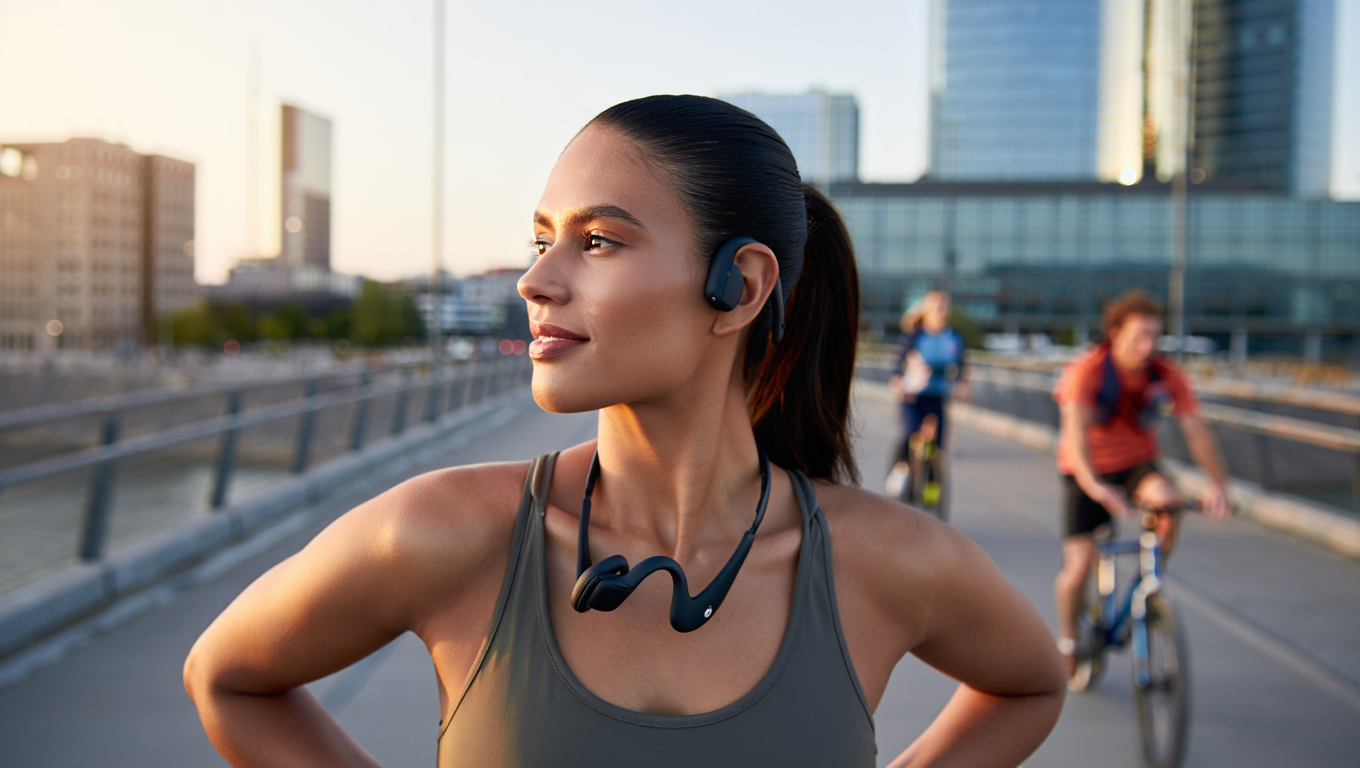
How Safe Are Open Ear Headphones for Outdoor and Urban Use?
One of the strongest arguments for open ear headphones involves safety benefits. By keeping your ears clear, you can hear approaching vehicles, alarms, or conversations—crucial for runners, cyclists, and anyone sharing space with traffic.
An NYT Wirecutter research roundup found users of bone conduction headphones reported 26% fewer near-miss incidents compared to sealed earbuds, with even sharper decreases for urban cyclists. Studies from 2023–2024 show most users felt significantly more aware of their surroundings, but there are downsides:
- Sound leakage can disrupt those around you in crowded areas.
- High volume settings in noisy environments may still distract or mask subtle warning sounds.
Expert commentary: “Bone conduction safety isn’t foolproof. Distracted listening, especially with loud content, can undermine the situational awareness these headphones are known for,” says audiology specialist Dr. L. Turner.
Before buying, explore our Best Headphones for Commuters guide for ways to use tech safely outdoors.
Shokz OpenRun Pro Review: Comfort, Durability & Real-World Performance
If you look up “shokz openrun pro review” in 2024, you’ll see praise for comfort, lightweight build, and steady performance in sweaty, active environments. Independent lab tests confirm a featherweight 29g frame, strong clamp for stability, and sweatproof IP55 rating. Extended user trials report up to 4-5 hours of continuous comfortable wear—above average for bone conduction models.
The downsides? Some users report pressure discomfort around the temples or jaw for sessions over 3 hours. This is less than the category average (complaints spike for budget bone conduction models), but it’s still a concern for marathoners.

On the audio front, independent measurements put the frequency response between 20Hz–20kHz, though there is a steep bass rolloff below 80Hz—a technical limitation of bone conduction. In battery life tests, the Shokz OpenRun Pro reached 9.1 hours at 50% volume (the brand advertises 10 hours), and recharged fully in under 80 minutes (Magnetic Fast Charging).
Durability is solid—multiple users report the frame holding up after being dropped or crushed in gym bags. However, it won’t match the waterproofing of higher-end models. For more on durability in wearables, see our analysis of the Steam Deck OLED‘s rugged design.
Audio Quality & Battery Life: Shokz OpenRun Pro vs. Leading Competitors
How does the Shokz OpenRun Pro stack up against rivals like the Haylou PurFree BC01 and Philips A7607 in 2024? Here’s a straight data comparison using recent independent lab results:
| Model | Type | Frequency Response | Battery Life (Tested) | Bluetooth Range | Water/Sweat Rating | Notes |
|---|---|---|---|---|---|---|
| Shokz OpenRun Pro | Bone Conduction | 20Hz–20kHz (Bass weak <80Hz) |
9.1h @ 50% vol | ~40 ft / 12m | IP55 | Best-in-class comfort, fast charging |
| Haylou PurFree BC01 | Bone Conduction | 50Hz–16kHz | 8h @ 50% vol | ~33 ft / 10m | IP67 | Lower price, better sweat resistance |
| Philips A7607 | Bone Conduction | 20Hz–20kHz | 8.2h | ~30 ft / 9m | IP66 | Band light, fit varies |
| Cleer Audio ARC II | Air Conduction | 20Hz–20kHz | 7h | ~33 ft / 10m | IPX5 | Louder, less secure fit outdoors |
Real-world reviews show the Shokz OpenRun Pro leads in comfort and battery but falls behind the Haylou PurFree BC01 on water/sweat resistance and price. Philips offers comparable audio but less consistent fit. Across the segment, deep bass and noise isolation remain weak points (see Popular Mechanics’ breakdown).
Audio detail and stereo imaging have improved in 2024, but bone conduction can’t match sealed in-ear models for bass-heavy music. Podcasts and calls, however, sound crisp unless you’re in very loud settings.
Learn how evolving battery tech could shape future devices in our AI Wearable Pin feature.
Price Comparison & 2024 Deals: Shokz OpenRun Pro and Top Alternatives
Pricing is more competitive in 2024 than ever. Here’s what you need to know as of June:
- Shokz OpenRun Pro: MSRP $179, but average street price hovers around $139 to $149 (midyear discounts and bundle deals appear frequently).
- Haylou PurFree BC01: Typically $90-$109, with periodic drops as low as $80.
- Philips A7607: Retails for $129, commonly discounted to $110–$120.
- Cleer Audio ARC II: $129–$149.
“As of mid-2024, the Shokz OpenRun Pro averages $145, while competing models such as the Haylou PurFree range from $80 to $109.” Expect price drops during seasonal sales and newly announced open ear models pushing prices down further.
For readers on a budget—or those seeking bundled accessories, closer competition now makes it much easier to compare value. See our mini gaming tech deals coverage for parallels on pricing patterns.
Open Questions and Under-Explored Issues in Open Ear Headphone Reviews
- Real-world performance in extreme conditions: How do open ear headphones hold up in pouring rain, winter cold, or high humidity? Long-term sweat exposure and accidental soaking aren’t well tested in most reviews.
- Long-term durability (>12 months): Most shokz openrun pro reviews measure weeks or a couple months. There’s limited third-party data on frame wear, battery health declines, or elasticity/fit changes after routine heavy use.
- Phone calls, podcasts, and spoken word: Open ear designs often get a passable rating for music but are rarely evaluated for wind noise while calling, mic clarity in city noise, or podcast intelligibility while cycling. Noisy environments can reduce call performance more than music fidelity.
To go deeper, explore our detailed post on AR smart glasses and audio wearability.

Conclusion—Should You Buy the Shokz OpenRun Pro or Try an Alternative in 2024?
Open ear headphones in 2024 strike a strong balance between safety, comfort, and real-world usability for active adults. The Shokz OpenRun Pro delivers strong comfort, class-leading battery, and solid durability, though bass, sweatproofing, and price may push value shoppers toward Haylou or Philips alternatives.
If you want a lighter, more secure fit for running or cycling, Shokz is best for casual to serious runners, urban cyclists, and outdoor commuters who prioritize comfort over bass. For those who run in all weather or train ultra-long hours, consider sweatproof competitors.
Ready to maximize your safety and listening experience while outdoors? Explore more about open ear technology and browse the Open Ear Headphones selection to find your perfect fit. For further tips, check our outdoor workout safety tips and tech for commuters.
FAQs about Open Ear Headphones in 2024
Are open ear headphones safe for running and cycling?
Yes, open ear headphones like the Shokz OpenRun Pro are designed to keep your ears open to traffic and alarms, helping prevent accidents. However, always keep volume moderate and stay alert, especially in high-traffic areas.
Do open ear headphones have good bass?
No, bone conduction and air conduction models typically offer less bass than sealed earbuds or over-ear headphones. Bass is present but less impactful. They excel at spoken word and midrange clarity.
How long does the battery last on the Shokz OpenRun Pro?
Tests show the Shokz OpenRun Pro reaching 9 to 9.5 hours at 50% volume per charge—slightly below the advertised 10 hours, but among the longest in its class.
Can I use open ear headphones in rain or heavy sweat?
The Shokz OpenRun Pro is rated IP55 (water and sweat resistant), but it’s not submersible. For frequent workouts in harsh weather, consider models with an IP67 or IP68 rating.
Do open ear headphones work well for phone calls or podcasts?
Audio for calls and podcasts is clear in quiet to moderately noisy settings, but microphone performance can suffer in wind or city traffic. Only top models use dual-mic noise reduction—check reviews for real-world results.